manufacturing taste
architecture. strategy. taste.
We are Manufacturing Taste.
We leverage design to shape the property market, helping developers create differentiated assets that the market chooses.
what is manufacturing taste?
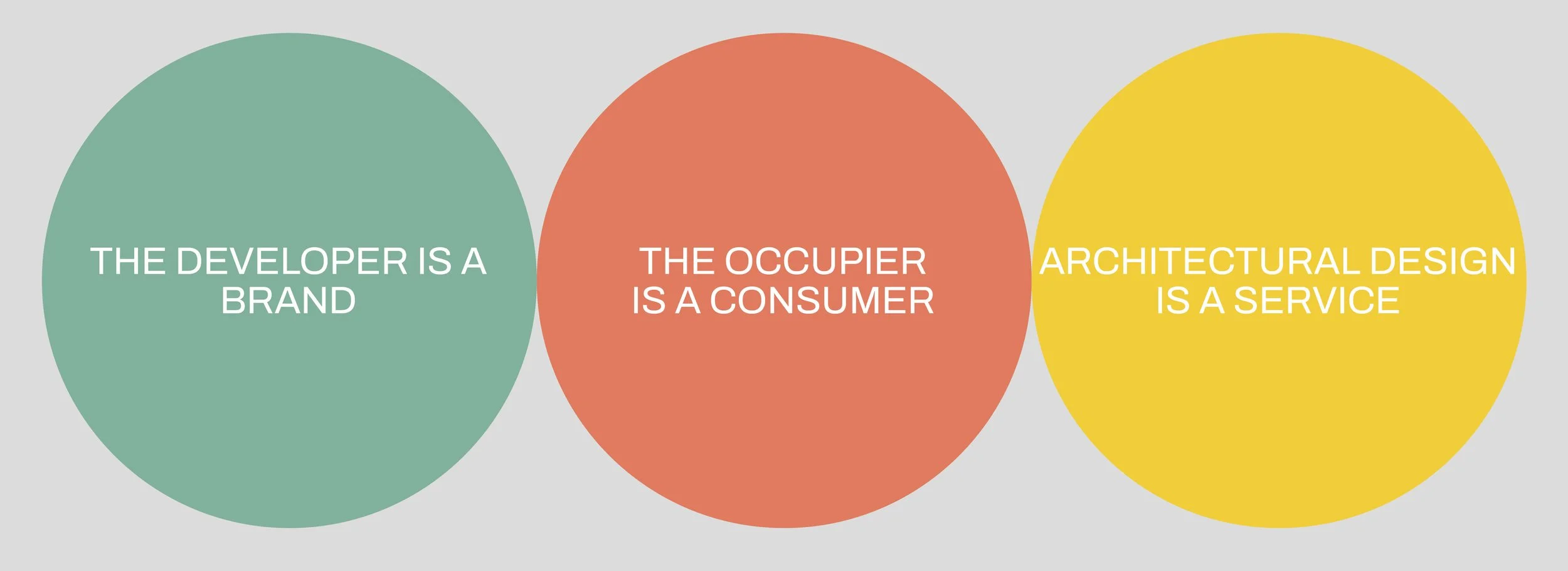
Manufacturing Taste is an architectural design consultancy that applies brand logic to capital assets.
Developers increasingly compete as brands for preference in crowded markets.
Occupiers increasingly behave as consumers, making lifestyle decisions about where to live, work and belong in a market that offers them choice.
When so many excellent buildings converge on specification, what gives an occupier a reason to choose one over another?
We make these choices seem inevitable.
Manufacturing Taste operates at the earliest strategic stage of development.
We bring together leasing, branding and architecture at the positioning stage - before the brief is written and before the design becomes fixed.
Together, we define what the asset should become, who it should be for and how it should be positioned, and develop the architectural concept design that makes that proposition real. Design, brand and leasing strategy reinforce one another rather than operate in silos.
The resulting proposition can be tested with the leasing market and funding partners before significant capital is committed.
Not just a better building, but a reason to choose it.
why manufacturing taste?
Taste is the closest representation of the self.
It is the prism through which we curate ourselves to the world - and the heuristic by which we choose what to wear, what to eat, what to listen to, where to work, where to live and where to belong.
But taste is neither innate nor immutable.
It is influenced.
Conditioned.
Manufactured.
At scale, it becomes collective taste.
Market trends are created.
Propagated.
Amplified.
Until they become internalised as demand.
Consumer brands have long understood that taste is the Rosetta Stone of consumer behaviour. They do not simply respond to demand; they influence what people notice, what they desire and what they are willing to pay more for.
They create signals.
They build desire.
Together, they establish the look, feel, sound and taste of an age.
Property is not outside this logic.
Buildings are also chosen for what they signal: identity, status, culture, belonging and confidence. Yet property too often chases what is architecturally fashionable. It consumes cultural meaning created elsewhere rather than helping to produce it.
We want to change that.
The market does not price assets on specification alone.
It prices how they are chosen.
We use architecture to shape preference before the market makes its judgement—aligning design, positioning and leasing logic so that an asset does not simply meet demand, but helps create it.
That is where design creates commercial advantage.
That is what it means to manufacture taste.